

Ramallah – 23rd July 2026 The Palestine Press Freedom Index for 2025, in its seventh edition, showed that the state of press freedom in Palestine remains classified as “sensitive”, with the overall index reaching 401 points out of 1,000. This represents an increase of 27 points (7%) compared to 2022, when the index was prepared for the West Bank and Gaza Strip and recorded 370 points, and an increase of 31 points (8%) compared to 2024, which recorded 374 points and was prepared for the West Bank only. This indicates a relative improvement in some of the areas covered by the index, despite the continuing challenges facing the Palestinian media environment.
The results of the index were announced during a workshop organized by the Palestinian Center for Development and Media Freedoms (MADA) last Tuesday , at Al-Quds Open University in the city of Ramallah, attended by a large number of journalists, media representatives, and representatives of local and international institutions, to announce the results of the seventh report of the index, which is prepared locally as part of the “Strengthening Civic Space and Social Accountability in Palestine” Project, supported by the European Union.
The workshop was opened by the Chairman of the Board of Directors of MADA, Dr. GHAZI HANANIA, who affirmed that the Palestine Press Freedom Index has become a national reference for measuring the state of media freedoms, noting that the 2025 results reflect the continuation of the challenges facing the Palestinian media environment and highlight the need for legal and institutional reforms that enhance media independence and protect journalists.
Dr. HANANIA stressed that the Israeli occupation remains the greatest threat to press freedom, calling on the international community to protect journalists and hold perpetrators of violations accountable. He also called on official Palestinian bodies to develop the legal and media environment in a manner that guarantees freedom of expression and citizens’ right to access information.
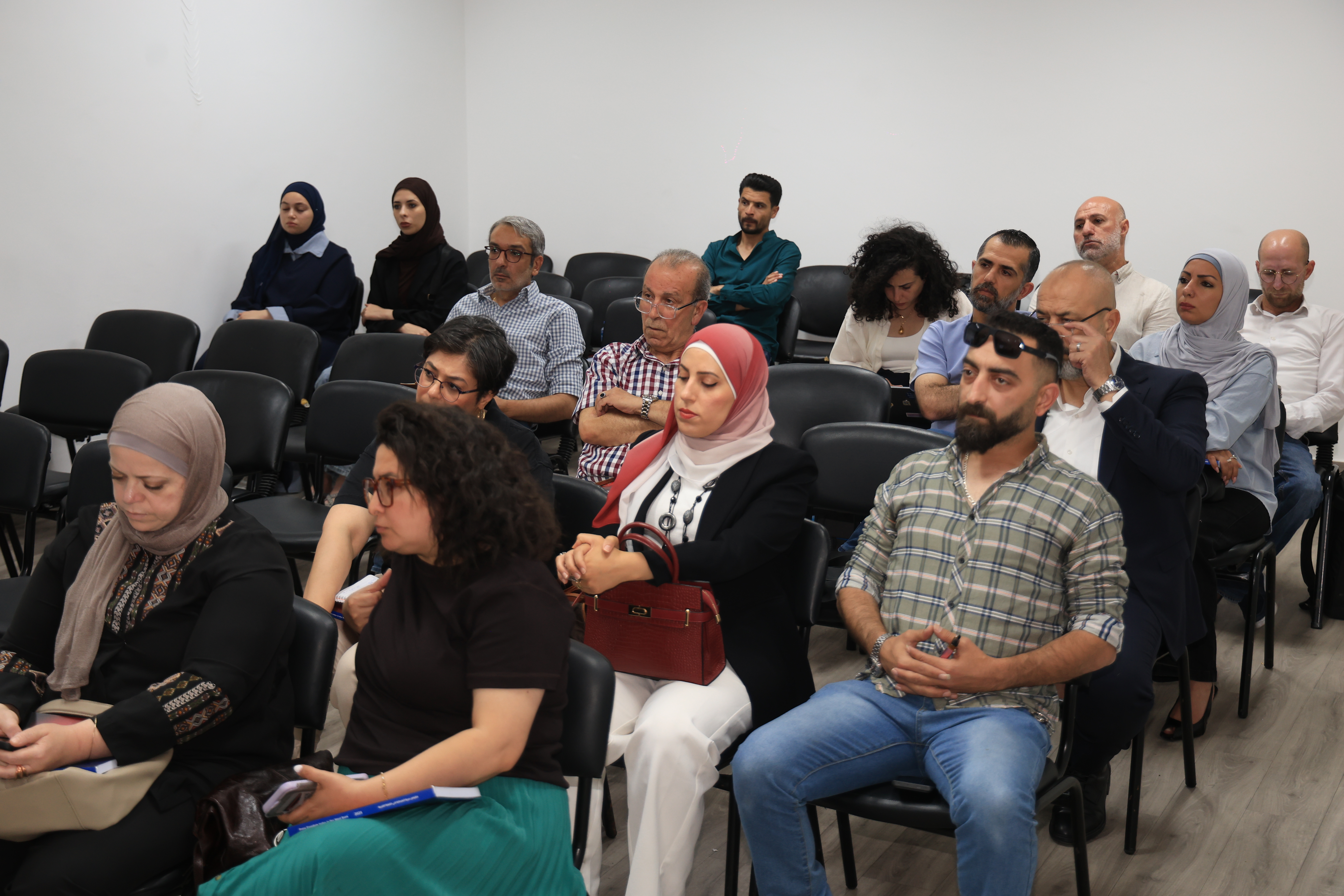
For his part, Dr. TALEB AWAD, a member of MADA’s Board of Directors, affirmed that freedom of opinion and expression and press freedom constitute the cornerstone and essence of freedoms, being the principal gateway to guaranteeing political and civil rights. He noted the importance of continuing to issue the Press Freedom Index despite the difficult circumstances in the West Bank and Gaza Strip, and that this year coincides with a political phase witnessing a democratic movement linked to legislative elections, which makes strengthening media freedoms a necessity for the success of any electoral process.
For his part, Journalists Syndicate Council member MUNTASIR HAMDAN affirmed the importance of this index, which constitutes an opportunity to build a national press freedom observatory, provided there is a strategic plan for developing the Palestinian media sector that takes into account technological transformations, foremost among them artificial intelligence, through developing journalists’ skills and strengthening the capacities of academic and media institutions. He also called for unifying Palestinian efforts to document violations against journalists and build legal files that contribute to prosecuting perpetrators before international courts.
HAMDAN noted that the passage of the Right to Access Information Law is closer than ever, affirming that this law represents a fundamental step toward strengthening press freedom and transparency, and enabling journalists to access public information, thereby contributing to the development of the Palestinian media environment and strengthening citizens’ right to knowledge.
For his part, Dr. QUSAI HAMED, of the Faculty of Media at Al-Quds Open University, expressed his pride in the launch of the Press Freedom Index, affirming that the progress of societies is measured by the extent of their respect for media freedom, as one of the fundamental pillars of democracy and civil peace. He noted that the responsibility of universities is not limited to graduating media professionals but extends to instilling the values of free and responsible media capable of conveying the truth, reflecting society’s issues and concerns, and contributing to social reform and strengthening accountability.
He added that the Palestinian journalist wages a dual struggle: on one hand defending media freedom within their own society, and on the other hand facing continuous Israeli violations against journalists, including killing and direct targeting, in order to guarantee the right of the Palestinian people and the world to know the truth.
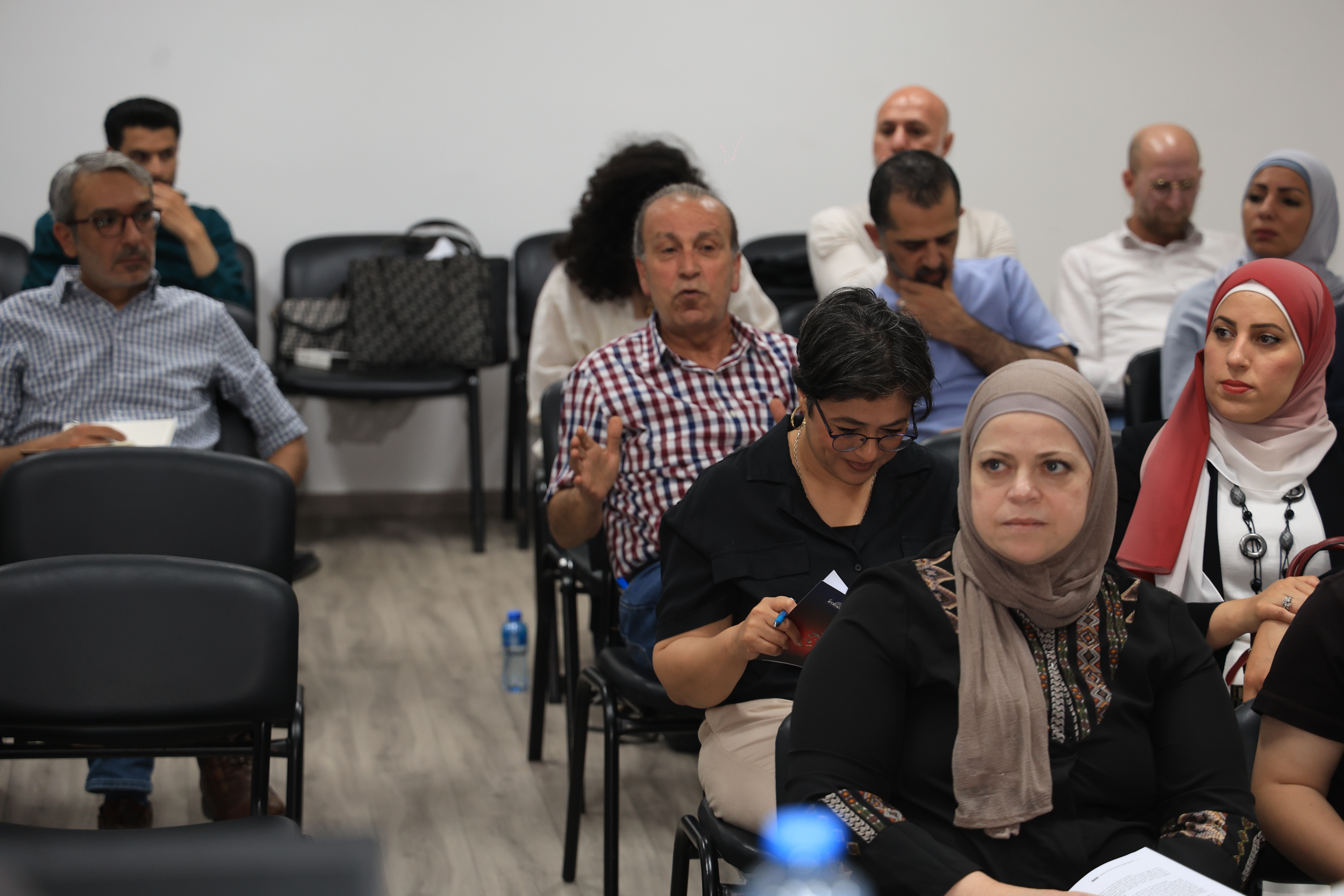
Researcher JIHAD HARB, Director of the “Thabat Center for Research and Public Opinion Polls”, presented the analysis of the index and its results, explaining that its objective is to move from a general description of the state of freedoms to a numerical measurement that allows identifying strengths and weaknesses and tracking developments over the years. He indicated that the historical comparison of the index results shows that 2025 witnessed a relative improvement compared to recent years, achieving 401 points within the “sensitive” level, which reflects the need for legislative and practical reforms, particularly regarding the right to access information, strengthening media independence, and reducing the pressures that drive journalists toward self-censorship.
HARB explained that the Press Freedom Index is based on eight domains and 72 indicators, combining the assessment of legislation and practical practices, and is not limited to legal texts but measures the extent to which they are reflected in journalists' ability to practice their work freely and independently.
HARB noted that the index remains below the levels it recorded before 2022. The index reached 484 points in 2018, 466 points in 2019, and 494 points in 2020, before declining notably to 374 points in 2022. The report attributes this decline to political and security developments, foremost among them the war on the Gaza Strip, which prevented the measurement from being carried out in the Strip during 2023 and 2024, with the assessment limited at that time to the West Bank, before the index resumed measuring the state of press freedom in both the West Bank and Gaza Strip in the 2025 edition.
HARB pointed out that the index results showed that the domain of transparency and the right to access information ranked lowest, recording 340 points, alongside the domains of government and self-censorship and journalists’ self-regulation. He affirmed that these domains continue to represent the most prominent challenges hindering the media’s ability to perform its oversight and societal role efficiently and independently.
HARB affirmed that the index results do not represent mere numbers and statistics, but reflect the daily reality experienced by journalists and the difficulties they face in accessing information, as well as the pressures affecting the independence of their work. He stressed that developing the Palestinian media environment requires legislative and institutional reforms, foremost among them passing the Right to Access Information Law, strengthening legal protection for journalists, and developing self-regulation mechanisms, thereby contributing to establishing a freer, more independent, and more professional media.
The Acting Director-General of MADA, SHIREEN AL-KHATIB, concluded the workshop by presenting the report’s key recommendations, which were addressed to the Palestinian government, the Journalists Syndicate, civil society, and international bodies. These recommendations called for halting assaults and prosecutions against journalists, expediting the passage of the Right to Access Information Law, amending the Cybercrimes Law to prevent it from restricting journalistic work, as well as strengthening judicial independence and establishing an independent supreme media council. The recommendations also called for supporting affected media institutions, developing the role of the Journalists Syndicate, and providing training, professional safety, and psychological support programs for journalists, affirming that improving the state of press freedom in Palestine requires joint national and international effort to protect journalists and strengthen a free and independent media environment capable of conveying the truth and holding decision-makers accountable.
To read the full index report:
https://www.madacenter.org/files/image/2026/PPFI-E2025.pdf
