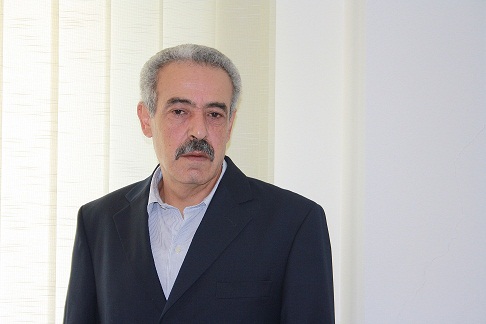


Al-Rimawi presents MADA’s experience in drafting an Access to Information law
Ramallah - 20/5/2014: The Palestinian Center for Development and Media Freedoms (MADA) participated in the conference “Sustaining Governance Reforms in the Middle East and North Africa” organized by the World Bank on 19-20/5/2014 in Tunis.
On that occasion, MADA’s General Manager, Mr. Mousa Al-Rimawi, presented MADA center’s experience, in cooperation with other Palestinian civil society organizations, in preparing a new draft law on access to information and promoting its importance for the Palestinian society.
Al-Rimawi mentioned the obstacles faced by Palestinian journalists as a result of the Israeli occupation and the Palestinian political division, and especially the difficulty in accessing information, which is reinforced by the absence of a law guaranteeing this right. This fact was clearly highlighted in a study conducted by MADA in 2010 on the status of access to information in Palestine, which recommended the need for the enactment of a modern law for access to information in the country.
Based on the results of this study, MADA and its partners, especially the Geneva Centre for the Democratic Control of Armed Forces (DCAF), conducted a series of workshops with journalists and analyzed their recommendations as well as those of other studies prepared by local experts at a national conference.
Successively, MADA formed a small committee that worked for two months on wording a new draft law based on a draft prepared by the Independent Commission for Human Rights in 2003, amendments made by the organization AMAN, studies of MADA and Internews on the subject of access to information, and the feedback provided by the journalists who participated in the workshops. The new draft was presented at a workshop attended by representatives of the Palestinian government, security forces, civil society organizations and international experts from DCAF. The participants’ notes were integrated into the draft law. Eventually, MADA delivered the draft to the Palestinian Cabinet with an accompanying note highlighting the importance of the law. Afterwards, MADA launched a wide mass media campaign including meetings with civil society organizations and Palestinian decision makers.
Al-Rimawi pointed out that the Palestinian Anti-corruption commission, in cooperation with the General Secretariat of the Council of Ministers, then constituted a national committee meant to discuss the draft and use it for the preparation of a new law. The new draft was then published on their websites for public discussion. In addition, MADA held two workshops (in Birzeit and Gaza) in cooperation with the Media Development Center of Birzeit University to discuss the draft in the presence of journalists, legal experts, media specialists, judges, civil society organizations, and representatives of the Anti-Corruption Commission. The audience’s recommendations and notes were collected and discussed again at a meeting held in March 2014 in the presence of representatives of the civil society and the Anti-Corruption Commission, and in which occasion the necessity that the law fit international standards was again emphasized. The minutes of the meeting were handed over to the Anti-Corruption Commission’s representative, who promised to take them into consideration when amending the draft before its discussion by the Palestinian Cabinet.
Al-Rimawi expressed his optimism about the enacting of the law in the near future, especially after the State of Palestine joined 15 international human rights agreements and treaties. Some challenges will remain however after the enactment of the law, starting with the necessity to change the current mentality holding that most information should stay confidential.
Al-Rimawi was grateful to all those, from both the governmental and non-governmental sectors, who supported the center’s efforts and collaborated with it in this essential project. He also thanked the Arab Network for Freedom of Information, DCAF, and other organizations which supported the campaign, especially the Open Society Foundations, IFEX, the Foundation for the Future, the Canadian Democracy and Law Center, and Article 19 for evaluating the draft law. Last, he expressed his thanks to the World Bank for providing this opportunity to present MADA’s experience in this field.